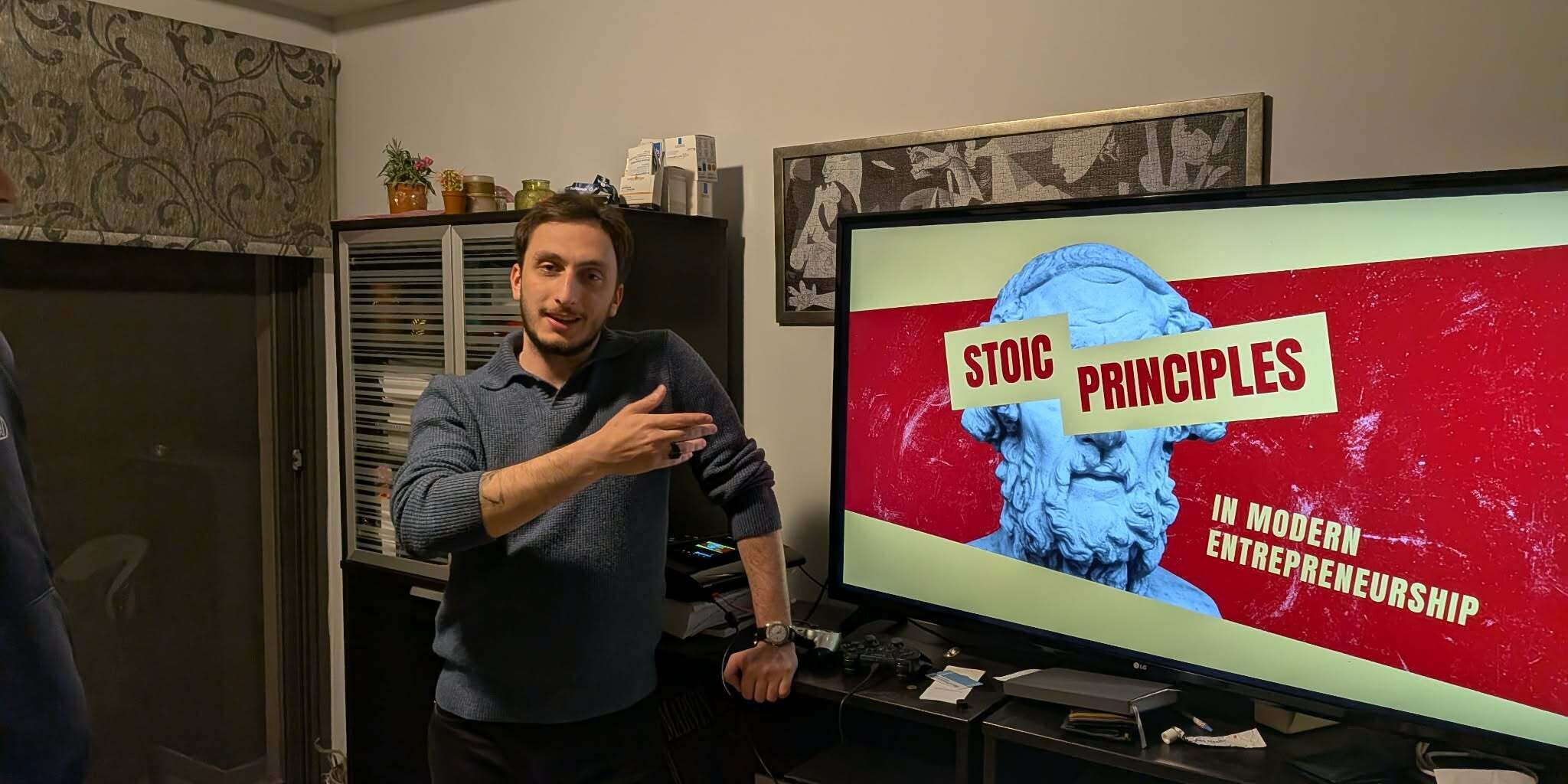
Activity Overview
Organized by: Panagiotis Chalkias
Format: Workshop – Interactive session on Stoic philosophy, emotional resilience and practical decision-making
Venue & Date: Alexandroupolis, Greece – 25 April 2026
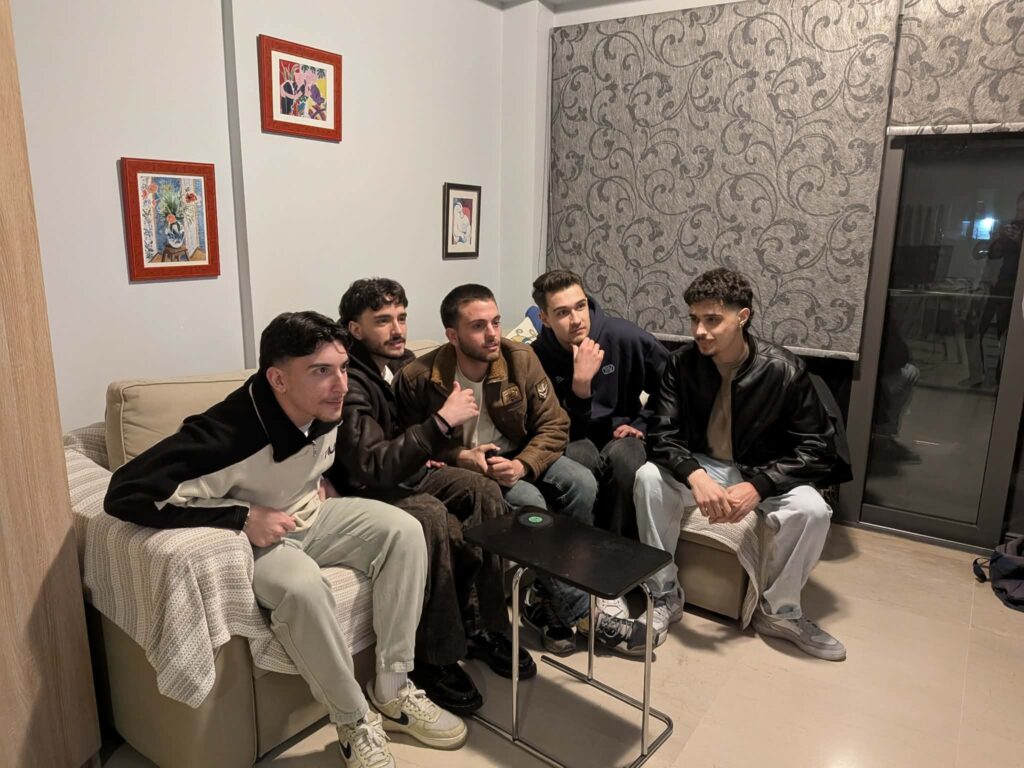
Participants & Profile: 6 participants – Young adults aged 20–25, mainly university students and young professionals, interested in personal development, philosophy, entrepreneurship, and self-improvement. Participants were members of the local community and peers with an interest in emotional resilience and decision-making.
Short description of the activity
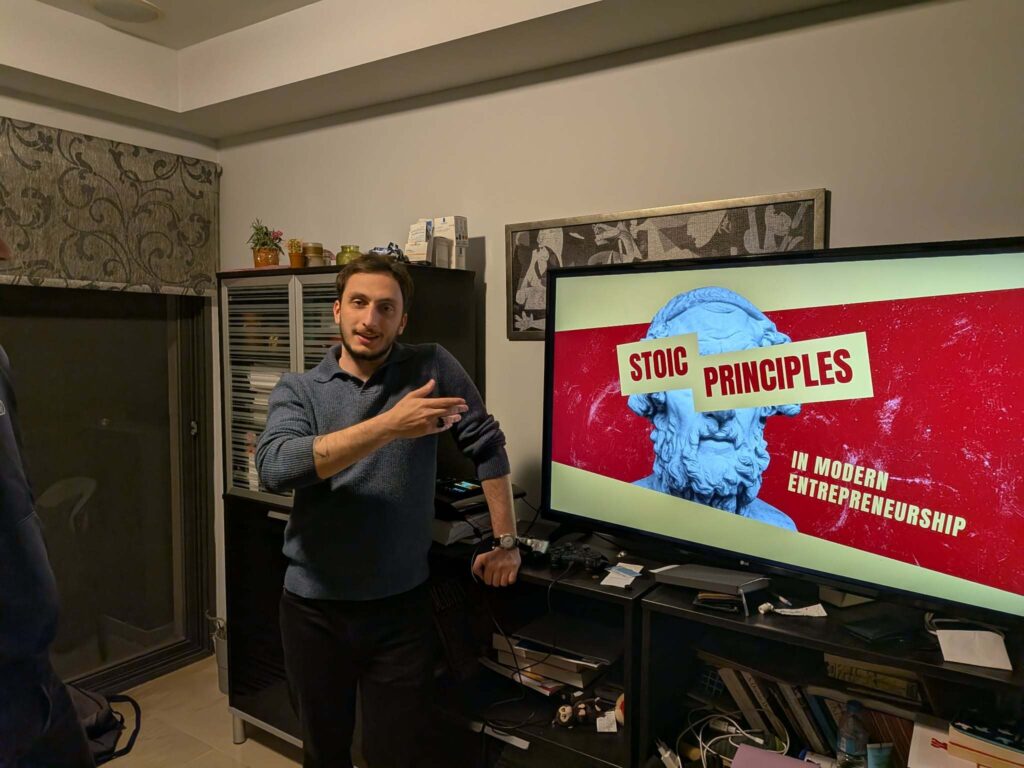
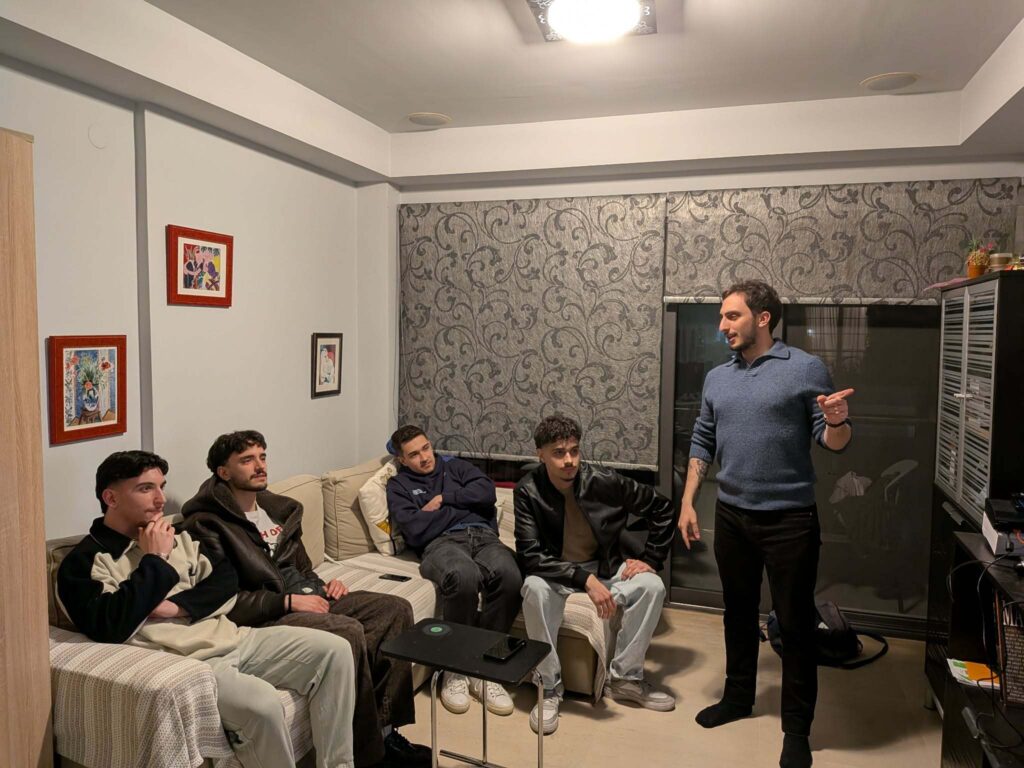
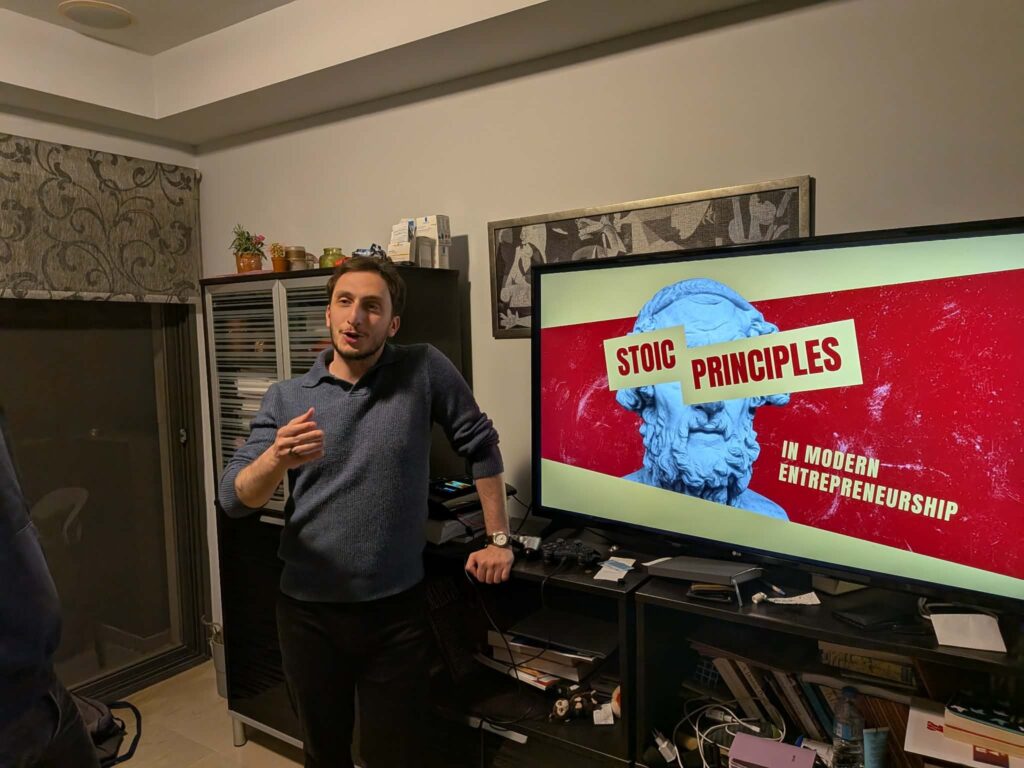
The activity was organized as an interactive workshop on Stoic philosophy and its application in modern life. Participants were introduced to key Stoic thinkers and core principles such as emotional resilience, self-control, rational decision-making, and focusing on what is within one’s control.
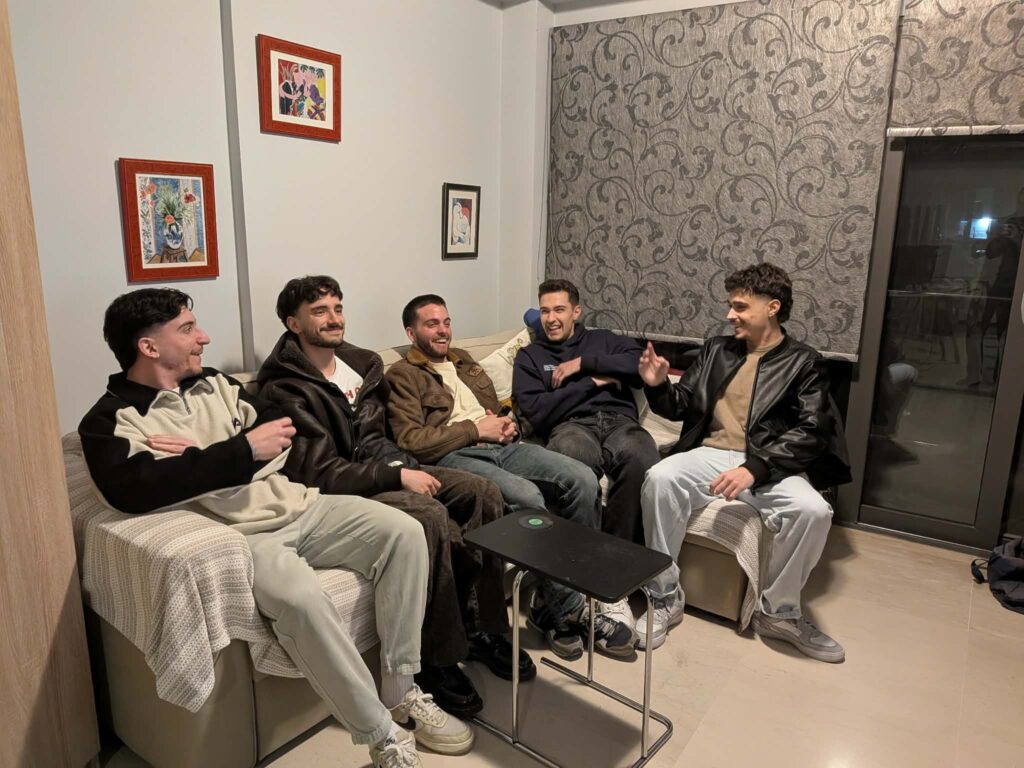
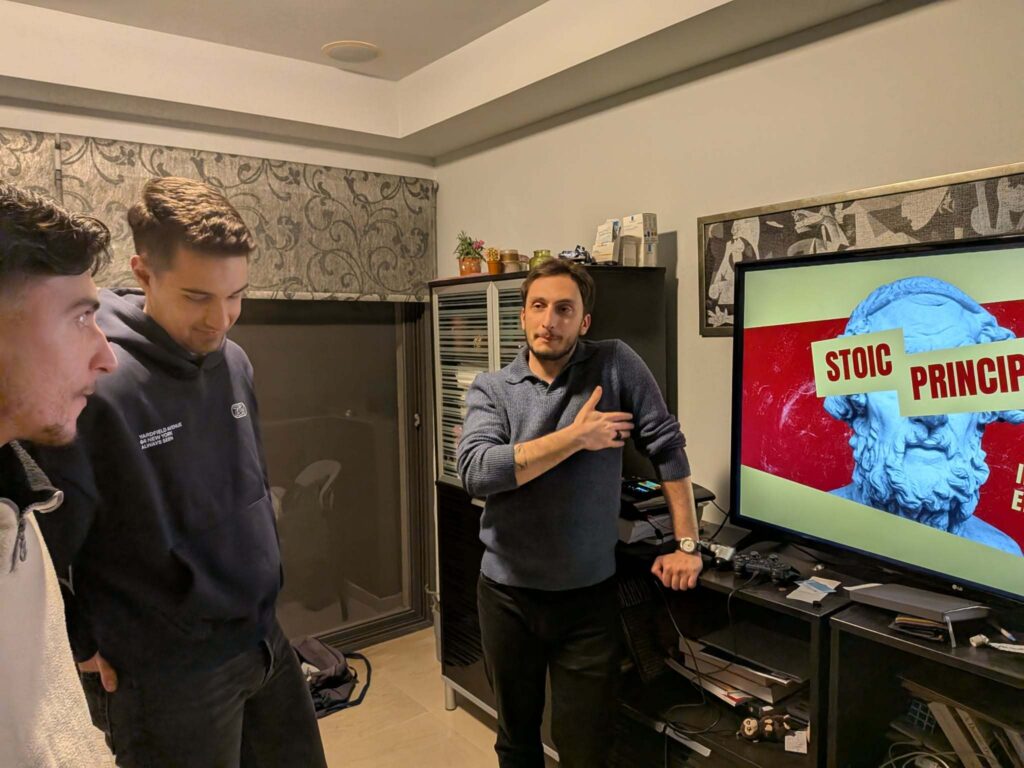
Following the presentation, participants engaged in discussion and reflection exercises connecting Stoic principles to real-life situations, personal challenges, and entrepreneurship. The activity used presentation, group discussion, and reflective questioning as its main methods.
Additionally, part of the session was dedicated to presenting the Erasmus+ programme and sharing personal experiences from the training course in Krushevo. Participants were informed about the opportunities Erasmus+ offers for youth mobility, learning, and international cooperation.
As a result, participants improved their understanding of Stoicism, developed greater awareness of emotional resilience strategies, and gained practical tools for applying Stoic thinking in everyday decision-making and stressful situations.
Conclusions, Recommendations, Insights
The workshop showed that Stoic philosophy remains highly relevant for young people, especially when connected to emotional resilience and decision-making. Participants were highly engaged and showed particular interest during the discussion and reflection exercises.
An important insight was that non-formal, interactive learning methods make philosophical topics more relatable and impactful for participants. The Erasmus+ presentation also generated interest, with several participants expressing curiosity about future international opportunities. Materials used included presentation slides, discussion prompts, and visual material from the Erasmus+ training course in Krushevo.